The New Affluence: Inside the Understated Aesthetic That Is Quietly Reshaping Luxury Home Design
The Loudest Statement Is Silence
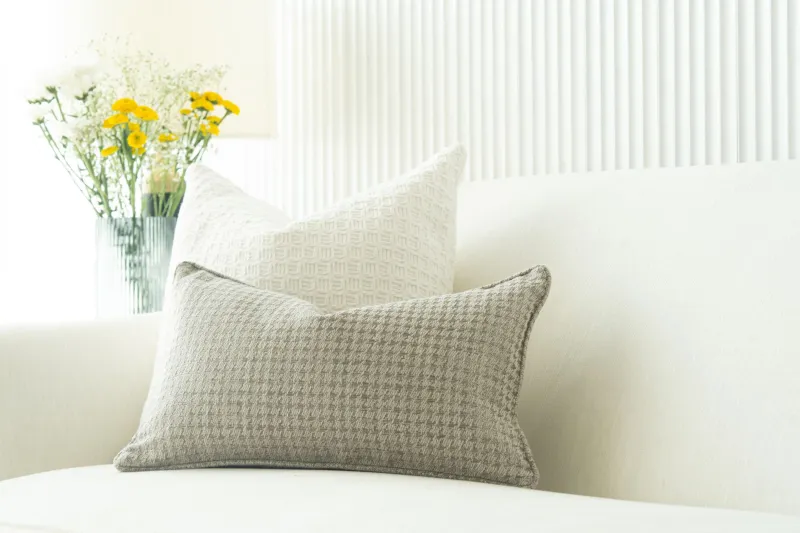
There is a particular quality of light in the great rooms of the most sought-after luxury properties currently trading in markets from Manhattan's Upper East Side to Beverly Hills to Chicago's Gold Coast. It is soft, diffused, and carefully considered — the product not of theatrical chandeliers or statement pendants, but of layered natural sources supplemented by recessed fixtures tuned to a warm, almost imperceptible glow. The walls are pale. The furniture is substantial but undemonstrative. The art is meaningful rather than decorative. And the overall effect is one of profound, deliberate calm.
This is quiet luxury — not a trend, its practitioners insist, but a correction. After a decade in which the premium residential market celebrated conspicuous material abundance, the buyers shaping today's transactions are seeking something categorically different: homes that feel considered rather than curated, permanent rather than fashionable, and deeply, almost therapeutically, livable.
Reading the Data
The evidence for this shift is not merely anecdotal. Analysis of luxury residential sales completed in the first three quarters of 2024 reveals consistent patterns in the properties commanding the strongest prices and the shortest days on market. Across segments, the top performers share a profile: natural material palettes, restrained color ranges anchored in warm neutrals and organic tones, an emphasis on spatial flow over room count, and wellness infrastructure — dedicated meditation spaces, filtered air and water systems, circadian lighting — integrated as standard rather than optional.
Properties featuring what brokers now shorthand as "quiet luxury" finishes — unlacquered brass, aged stone, handwoven textiles, bespoke joinery — are consistently outperforming comparable listings that prioritize high-gloss surfaces and maximalist fixture packages. In Manhattan specifically, a sampling of closed transactions above the $4 million threshold shows that residences renovated or developed within the past two years with this aesthetic approach achieved, on average, 97.3 percent of asking price, compared to 91.8 percent for properties featuring more overtly opulent presentations.
The market, in short, is voting with considerable conviction.
Conversations With Designers Defining the Moment
Sophia Renault, a New York-based interior designer whose client roster spans private residences in Tribeca, the Hamptons, and Miami's Coconut Grove, describes a fundamental transformation in the nature of client conversations over the past three years. "The brief used to begin with aesthetics — what do you want it to look like? Now it begins with how do you want it to feel? What do you want this home to do for you physically and emotionally? The visual language follows from that."
For Renault, the implications are significant. "When your starting point is sensation rather than appearance, you make completely different decisions. You choose a plaster wall finish because of the way it absorbs sound and diffuses light, not because it photographs well. You choose a linen sofa because of how it feels against skin after a long day, not because it's on trend. The result is a home that communicates wealth through quality rather than quantity — and sophisticated buyers recognize that distinction immediately."
That recognition is driving a parallel evolution in the materials market. Demand for handmade ceramic tile, reclaimed wood with documented provenance, natural stone in muted, unfussy profiles, and custom textiles woven in small American and European workshops has increased substantially. Several designers report wait times of six months or more for specific artisan suppliers whose products have become quietly essential to the aesthetic.
Wellness as Architecture
Perhaps the most consequential dimension of the quiet luxury movement is its integration of wellness not as an amenity layer but as a structural principle. In the properties that most fully embody this moment, the distinction between spa and home has effectively dissolved.
Dedicated wellness rooms — distinct from home gyms, though those remain standard — are appearing with increasing frequency in high-end renovations and new developments. These spaces typically combine infrared sauna, cold plunge or contrast therapy, and a contemplative area with acoustic treatment and circadian lighting. They are designed for daily use, not occasional resort-style indulgence.
Beyond dedicated rooms, wellness thinking permeates the entire residence. HVAC systems with hospital-grade air filtration and humidity control. Water purification that extends to every tap. Mattresses specified to individual sleep profiles. Lighting systems that shift color temperature through the day to support natural cortisol rhythms. Kitchens designed around the actual cooking and eating habits of the occupants rather than the performance of culinary aspiration.
James Whitmore, a developer whose firm recently completed a boutique twelve-unit building on the Upper West Side with full wellness integration, describes the logic: "The most valuable asset a wealthy person has is their physical and mental health. If your home actively supports that — if you sleep better, breathe better, feel calmer and more restored when you're there — the financial premium is not only justified, it's essentially rational."
Sustainability as Luxury Signal
Interwoven with wellness is an increasingly sophisticated relationship to sustainability — one that operates, in the luxury tier, at a considerable remove from mass-market environmentalism. High-net-worth buyers are not motivated by regulatory compliance or social signaling. They are motivated by the intrinsic qualities of sustainable materials and construction approaches: durability, authenticity, the absence of synthetic off-gassing, and the aesthetic resonance of materials that have been produced with care.
Reclaimed wood floors carry the grain and patina of their previous lives. Wool insulation performs exceptionally and requires no chemical treatment. Natural plaster breathes in a way that synthetic surfaces cannot. These choices are not sacrifices — they are upgrades, in the estimation of buyers who have the knowledge and resources to make the distinction.
What Luxury Actually Means Now
The quiet luxury aesthetic is, at its core, a redefinition of what it means to spend significantly on a home. It represents a rejection of the notion that expense must be visible to be valid, and an embrace of the idea that the most sophisticated statement a residence can make is one of absolute, unhurried confidence.
For buyers at this level, the message is clear: the homes that will hold their value, their relevance, and their capacity to deliver genuine wellbeing are not the ones that shout. They are the ones that, in the most considered and deliberate way possible, simply are.