The Address That Contains Everything: How Urban Luxury Buildings Became Destinations in Themselves
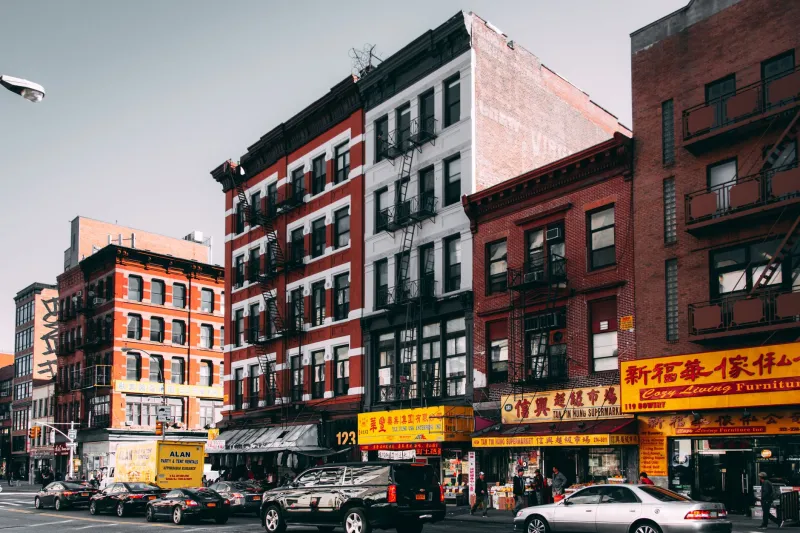
There is a particular kind of Saturday morning in New York — or Chicago, or Los Angeles, or Miami — when leaving the building feels less like an adventure and more like a negotiation. The weather is uncertain. The reservation is weeks away. The streets, for all their vitality, demand something the resident is not certain they wish to give. On mornings like this, the building that asks nothing of the city beyond its location has a distinct advantage.
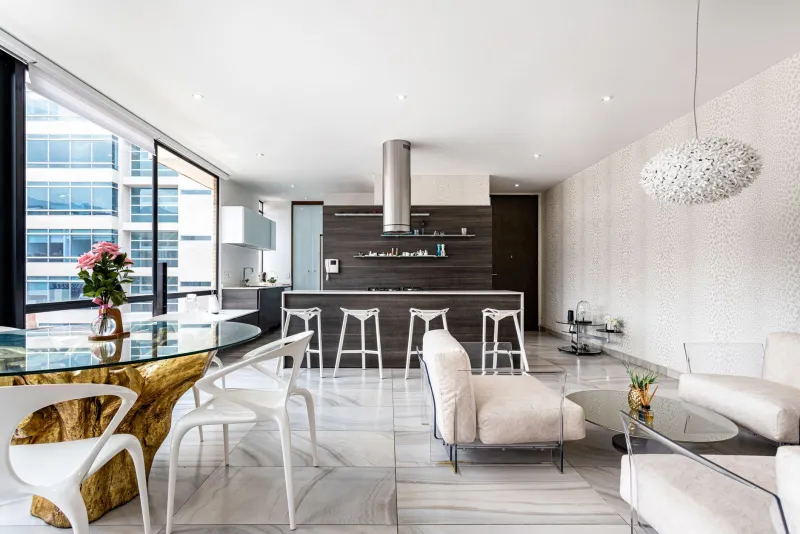
This is the logic, quietly but systematically, behind one of the most significant shifts in urban luxury real estate development over the past decade. Developers at the highest tier of the market are no longer simply building residences. They are building ecosystems — self-contained environments designed to satisfy every material, social, and restorative need without requiring their residents to step outside.
The ambition is considerable. So, increasingly, is the execution.
The Amenity as Architecture
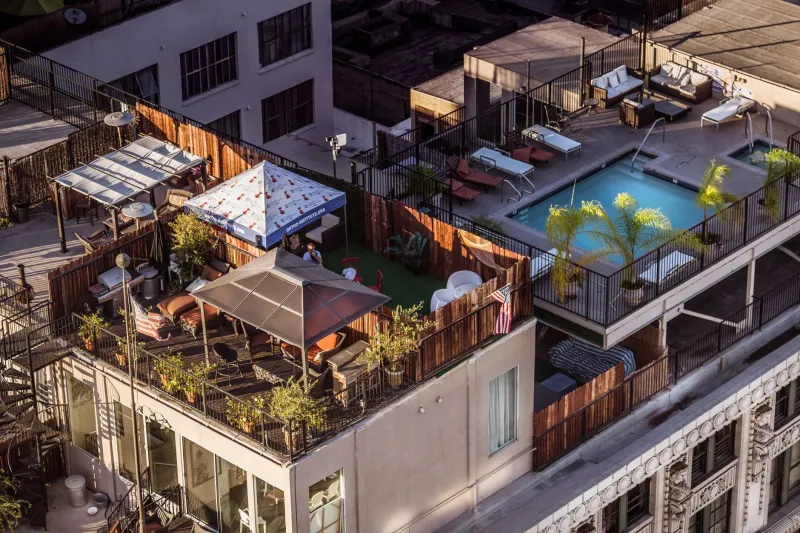
For a long time, the amenity package at a luxury building was understood as a supporting character — a concession to lifestyle expectations, present but peripheral. A fitness center. Perhaps a rooftop terrace. A doorman whose discretion was impeccable. These were the expected provisions, and they performed their function without demanding particular attention.
That era is over. At the most competitive addresses in the country's major urban markets, amenities have migrated from the margins of the development program to its center. They are not features appended to a residential building; they are, in many cases, the building's primary reason for being.
The numbers reflect this shift. Developers at the ultra-luxury tier are now routinely allocating between fifteen and twenty-five percent of a building's total square footage to amenity programming — a proportion that would have been commercially unthinkable a generation ago. What fills that space is, by any measure, extraordinary.
Private Members' Clubs, By Invitation of Address
The most compelling evolution in luxury amenity design is the emergence of the resident-exclusive social club. In buildings targeting ultra-high-net-worth buyers, the lobby-level or podium-floor programming increasingly resembles a private members' club in everything but its formal designation.
Curated lounges with dedicated bar programs and professional hospitality staff. Private dining rooms managed by credentialed culinary directors, available for reservation by residents and their guests. Screening rooms appointed to the standard of a boutique cinema. Library and study environments furnished with the kind of quiet authority that renders working from home not a compromise but a preference.
At One High Line in Manhattan's West Chelsea neighborhood, the amenity suite occupies a substantial portion of the building's lower floors and includes a private restaurant, a bar, and a series of entertaining spaces that rival the programming of the city's most exclusive clubs. The distinction, of course, is that membership requires only the acquisition of a residence — an act of selection that is itself a form of curation.
This model has proliferated across markets. In Miami's Brickell district, in Chicago's Fulton Market, in Los Angeles's Century City corridor, buildings are competing on the quality and exclusivity of their social infrastructure with the same intensity they once competed on views and ceiling heights.
Wellness as a Resident Right
If the social club represents the communal dimension of the self-contained luxury building, the wellness sanctuary represents its personal one. And in this category, the standards being applied are extraordinary.
Leading developments now incorporate wellness programming that rivals — and in some cases exceeds — what is available at the country's most celebrated resort properties. Full-service spas with dedicated treatment rooms, hydrotherapy facilities, and registered practitioners operating on-site. Fitness environments equipped with Pilates reformers, altitude training chambers, and recovery suites featuring infrared saunas and cryotherapy. Meditation rooms designed with the acoustic precision of professional recording studios.
The integration of professional wellness staff — nutritionists, physical therapists, sleep coaches — into the building's service model represents perhaps the most significant departure from conventional residential programming. These are not amenities that can be accessed during limited hours. They are services available to residents with the same reliability as building security or package management.
For buyers who might otherwise allocate meaningful time and expense to maintaining relationships with practitioners scattered across a city, the consolidation of these services within their own building is not merely convenient. It is, in the most literal sense, a lifestyle upgrade.
Culture and Curation Within the Building Envelope
Among the more unexpected developments in luxury amenity programming is the emergence of the resident art gallery. Several buildings in New York, Miami, and Los Angeles now maintain curated exhibition spaces in their common areas, presenting work from established and emerging artists on a rotating basis — sometimes in partnership with commercial galleries, sometimes through the building's own curatorial program.
The appeal is multilayered. For residents who are active collectors, the building's gallery represents an extension of their aesthetic world and, occasionally, an opportunity for acquisition. For those whose engagement with art is more ambient, the presence of serious work in their daily environment is a quality-of-life enhancement that is difficult to quantify but impossible to overlook.
The symbolic dimension is equally significant. A building that treats its common spaces as exhibition venues is communicating something about its values — and about the values it attributes to its residents. It is an assertion that the people who live here are the kind of people who notice.
The Urban Paradox
There is an irony embedded in all of this, one that developers and sociologists have begun to examine with equal interest. The luxury building that promises to contain everything is, by definition, a building that asks its residents to engage less with the city surrounding it. The neighborhood, in this model, becomes a view rather than a destination.
Whether this represents a retreat from urban life or a refinement of it is a question that different observers answer differently. What is not in question is the market's verdict. Buildings that offer comprehensive, hotel-caliber amenity ecosystems are commanding premiums — in both price per square foot and in the velocity with which their units are absorbed — that validate the investment decisively.
The city endures, vast and vital, beyond the glass. But for a growing number of the country's most discerning residents, the address itself has become the destination.