Built to Impress: Why Architectural Distinction Is the New Currency of Luxury Real Estate

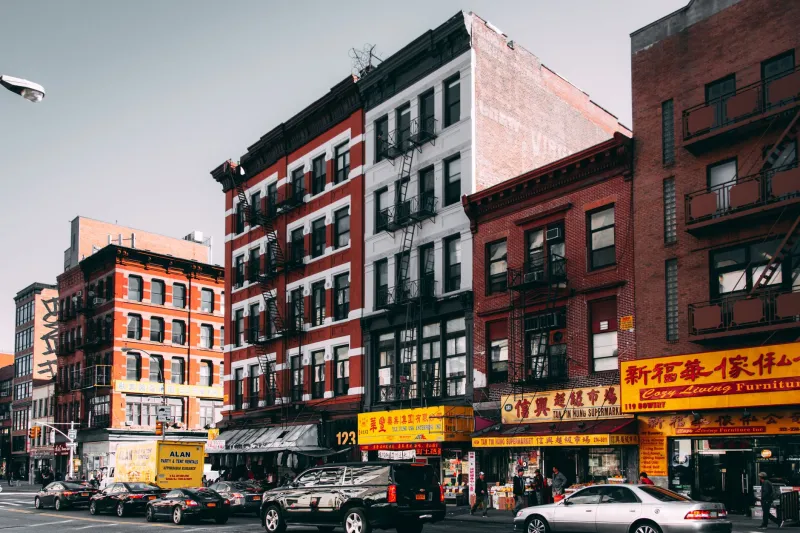
Photo by Photo by Lamont Mobley on Unsplash on Unsplash
There was a time, not so long ago, when luxury residential real estate could be summarized by a short list of credentials: a prestigious address, a generous floor plan, a doorman, and perhaps a view that justified the asking price. Those credentials still matter. But among the buyers who are reshaping the upper tier of the American property market, they are increasingly regarded as the baseline—necessary, but no longer sufficient.
What commands genuine attention today, and what separates a truly exceptional property from one that is merely expensive, is architectural character. Specifically, the presence of structural and design features so deliberate, so considered, and so difficult to replicate that they render a residence singular. In the language of the market, these are not amenities. They are statements.
The Shift From Commodified Luxury to Curated Space
The high-net-worth buyer of 2024 is, in many respects, a more sophisticated consumer than the generation that preceded them. Exposure to world-class hospitality, international architecture, and the curatorial precision of museum design has recalibrated expectations. A buyer who has stayed in a Tadao Ando–designed retreat or dined beneath the coffered ceilings of a landmarked New York townhouse returns home with a sharpened sense of what space can accomplish.
This is the context in which architectural features have risen to prominence. A double-height living volume that stretches to twenty-two feet does not merely create the impression of grandeur—it fundamentally alters how a person inhabits a room, how sound travels, how natural light performs throughout the day. A private atrium, carved from what might otherwise be a secondary courtyard, transforms an urban residence into something that feels closer to a personal sanctuary than a real estate transaction.
Developers who understand this shift are not simply building larger apartments. They are commissioning experiences.
The Elements That Define Architectural Prestige
Certain features have emerged as particularly powerful signals of distinction in today's luxury market. Chief among them is ceiling height. In dense urban environments—Manhattan, Chicago's Gold Coast, Los Angeles's West Hollywood Hills—the vertical dimension of a residence is among its most constrained and therefore most coveted attributes. A property offering ceilings of fourteen feet or higher occupies a rarefied category, one that no renovation budget can easily manufacture in a building designed for standard proportions.
Custom millwork represents another axis of differentiation. The term is often used loosely in real estate marketing, but genuine bespoke joinery—hand-finished cabinetry designed around a specific wall's dimensions, library shelving integrated into the structural bones of a room, paneling that references a historical period without becoming pastiche—communicates a level of investment and intentionality that mass-produced finishes simply cannot approximate. It is the difference between a home that has been decorated and one that has been designed.
Lighting, too, has ascended from functional afterthought to architectural instrument. Properties that incorporate museum-caliber lighting systems—adjustable color temperature, concealed cove lighting, picture-rail tracks that allow art to be illuminated with precision—are effectively offering buyers the infrastructure for a private gallery. In a market where serious collectors represent a significant share of ultra-luxury purchasers, this is not a peripheral feature. It is a core value proposition.
Why Developers Are Investing in Structural Storytelling
For developers operating at the upper end of the market, the calculus behind architectural investment has become increasingly clear. Distinctive structural features are not merely aesthetic choices; they are pricing mechanisms. A residence that offers something genuinely unrepeatable—a carved stone fireplace surround sourced from a French château, a steel-and-glass staircase engineered as a sculptural centerpiece, a rooftop loggia designed by a recognized landscape architect—exists outside the standard comparables framework.
When a property cannot be easily benchmarked against its neighbors, the conversation about value shifts. Buyers are no longer asking whether the price per square foot is justified relative to the building across the street. They are asking whether the experience of living in this specific space is worth the premium. That is an entirely different negotiation, and one that tends to favor the seller.
Some of the most compelling recent examples of this strategy can be found in the adaptive reuse sector. Former industrial buildings in cities like Brooklyn, Chicago's Fulton Market, and Washington, D.C.'s Shaw neighborhood have been reimagined as residential properties that preserve—and celebrate—their original structural vocabularies. Exposed cast-iron columns, original timber beams, factory-scale windows: these are not features that a developer could fabricate from scratch without extraordinary expense. Their authenticity is, in itself, a form of luxury.
The Buyer's Perspective: Investing in Irreplaceability
From the buyer's side of the transaction, the appeal of architectural distinction is partly emotional and partly strategic. The emotional dimension is straightforward: people want to live in spaces that feel meaningful, that reflect a point of view, that offer daily encounters with beauty and craft. A home defined by exceptional architecture delivers on that desire in ways that a generic luxury finish package, however expensive, rarely does.
The strategic dimension is equally compelling. In a real estate market that periodically experiences pricing volatility, properties with irreplaceable architectural attributes have historically demonstrated greater resilience. They are, by definition, not interchangeable with the inventory around them. That scarcity has value—both at the time of purchase and, critically, at the time of resale.
Buyers who approach the luxury market with this framework are, in effect, thinking like collectors. They are acquiring not just real estate but a specific object, one whose qualities are fixed in ways that location and square footage alone are not.
The Architecture of Aspiration
At 112 Mercer, we believe that the most enduring properties are those where architecture and aspiration are genuinely aligned—where the structural decisions made during design and construction continue to reward their inhabitants years, even decades, after the initial transaction. The corner office effect that has long defined professional prestige has found its residential counterpart: the home that announces, through the quality of its bones rather than the loudness of its finishes, that its owner understands the difference between spending and investing.
In a market crowded with premium offerings, architectural distinction remains among the clearest signals of genuine exceptionalism. It is not easily manufactured, not quickly replicated, and not soon forgotten. For buyers and developers alike, that is precisely the point.