The Body as Blueprint: How Luxury Residences Are Being Built Around Human Health
For most of the twentieth century, wellness in residential design meant little more than a gym on the amenity floor and perhaps a sauna tucked beside the pool. The body was an afterthought — accommodated, but never truly considered. The apartment itself was a stage set for aspiration: high ceilings, fine materials, commanding views. Whether it made its occupants healthier was a question no one thought to ask.
That question is now central to how the most ambitious luxury residential projects in the United States are conceived, financed, and sold.
A Shift Rooted in Lived Experience
The pandemic years accelerated a reckoning that was already quietly underway among affluent homebuyers. Spending extended periods within one's residence — truly inhabiting it rather than merely sleeping there — revealed something uncomfortable: that even the most expensively appointed apartments could feel oppressive, stagnant, and physiologically hostile. Air quality became a subject of dinner conversation. Natural light, or its absence, became a measurable factor in mood and productivity. The relationship between built environment and biological wellbeing was no longer abstract.
For buyers in the $5 million and above category, the response was decisive. Developers who had already been experimenting with wellness-forward design found their waiting lists lengthening. Those who had not began retooling their programs with urgency.
"We had buyers who were telling us, very directly, that they didn't want another beautiful apartment — they wanted a healthy one," recalls one developer active in the New York and Miami markets. "That was a genuinely new conversation. Five years earlier, no one was framing it that way."
Air, Light, and the Science of the Interior
The wellness amenities now appearing in ultra-luxury residential developments are not superficial gestures. They reflect a serious engagement with environmental medicine and chronobiology — the study of biological rhythms and their relationship to light, temperature, and air composition.
Air purification systems in the most advanced buildings go well beyond HEPA filtration. Some incorporate activated carbon layers, UV-C sterilization chambers, and real-time air quality monitoring that allows residents to view particulate counts, VOC levels, and humidity data from a smartphone interface. In buildings where individual unit control is prioritized, residents can manage their own air environment independently of shared building systems — a distinction that matters enormously to buyers with respiratory sensitivities or young children.
Circadian lighting — sometimes called tunable lighting — represents perhaps the most technically sophisticated wellness intervention now entering the luxury residential mainstream. These systems modulate the color temperature and intensity of artificial light throughout the day in alignment with the body's natural hormonal rhythms, supporting alertness in the morning and easing the transition toward sleep in the evening. Originally developed for hospital environments, the technology has been refined to a point where it integrates seamlessly into residential architecture without sacrificing aesthetic quality.
At developments like Fifteen Hudson Yards in New York and the Perigon in Miami Beach, circadian lighting is no longer a premium upgrade — it is standard specification.
Biophilic Design Beyond the Potted Plant
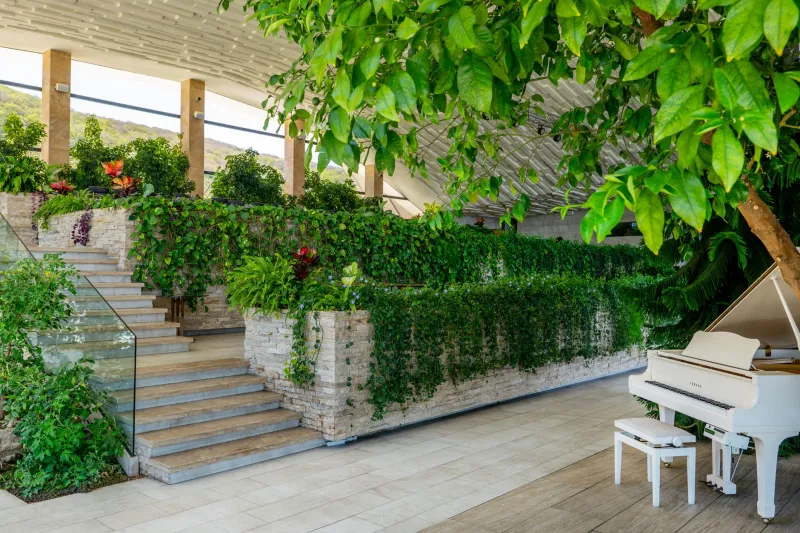
Biophilic design — the deliberate integration of natural elements into built environments to support human psychological and physiological health — has become one of the defining aesthetic philosophies of the current luxury residential moment. But the term is frequently misapplied, used to describe little more than a living wall in a lobby or a generous supply of houseplants.
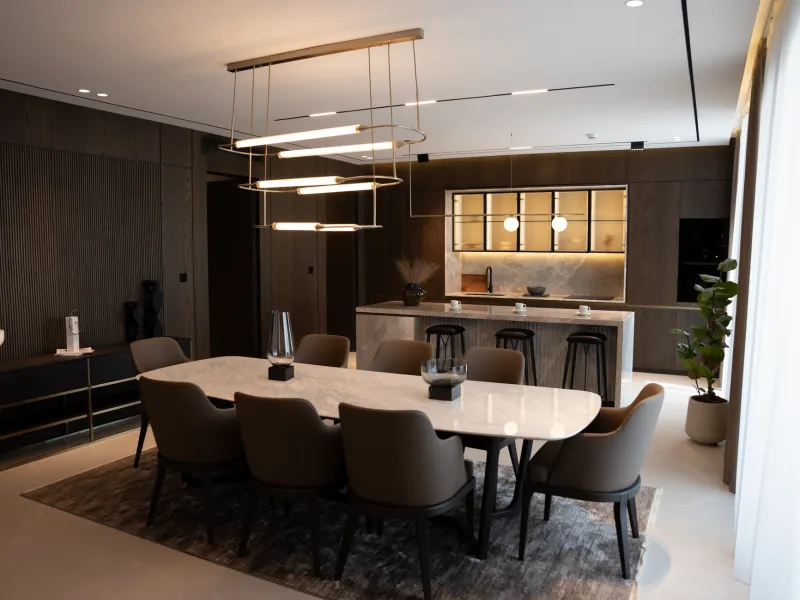
In its more rigorous application, biophilic design shapes the entire spatial experience of a residence. It governs the orientation of rooms to maximize exposure to natural light and exterior views. It informs material selection, favoring stone, unfinished wood, and natural textiles over synthetic surfaces. It influences the acoustic environment, recognizing that human beings are physiologically calibrated to find certain natural sounds restorative and certain artificial ones stressful.
Developers working at the highest levels of the market are engaging environmental psychologists and wellness consultants alongside their architects and interior designers — a collaboration that would have seemed eccentric a decade ago and now feels almost obligatory.
Water, Movement, and the Longevity Economy
The wellness infrastructure extending beyond individual units is equally ambitious. Hydration stations offering filtered, mineralized water at precise temperatures are appearing in building common areas. Cold plunge pools and infrared saunas — once the province of specialized wellness retreats — are now standard amenity offerings in buildings targeting buyers above a certain price threshold.
Some developments are going further still. A small but growing number of ultra-luxury buildings in New York and Los Angeles have incorporated dedicated longevity suites — private spaces equipped with hyperbaric oxygen chambers, red light therapy panels, and IV therapy stations — available by appointment for residents. The concept draws directly from the burgeoning longevity medicine sector, which has attracted significant investment and cultural attention among the affluent demographic that luxury real estate also courts.
The underlying premise is consistent across all of these interventions: that the home is not merely a place to rest between engagements, but a primary instrument of health maintenance — as consequential to long-term wellbeing as diet, exercise, or medical care.
Certification, Credibility, and the WELL Standard
As wellness-focused design has moved from niche to mainstream in the luxury segment, the industry has developed formal certification frameworks to validate claims and distinguish genuine commitment from marketing language. The WELL Building Standard, administered by the International WELL Building Institute, has emerged as the most recognized of these frameworks in the residential context.
WELL certification evaluates buildings across ten categories — air, water, nourishment, light, movement, thermal comfort, sound, materials, mind, and community — and assigns ratings based on documented performance rather than design intent alone. For buyers sophisticated enough to ask pointed questions about what a developer's wellness claims actually mean, WELL certification provides an independent answer.
The certification process is rigorous and not inexpensive, which means that buildings pursuing it are making a statement about their priorities that extends beyond the sales office. In a market crowded with wellness-adjacent marketing, that signal carries real weight.
The New Definition of Premium
What emerges from a survey of the current ultra-luxury residential landscape is a fundamental reorientation of what premium means. For much of the modern era, luxury was communicated through size, address, and the quality of finishes — the thickness of the marble, the provenance of the hardware, the view from the terrace.
Those things still matter. But they are increasingly insufficient. The buyer who has spent $7 million or $12 million on a residence expects it to actively support the quality and duration of their life — not merely to reflect the quality of their taste.
At 112 Mercer, we recognize that the most exceptional spaces are those designed not just to impress, but to sustain. The home of the future is already being built. It knows what your body needs before you do.