Invisible by Design: The Rise of the Off-Market Luxury Transaction
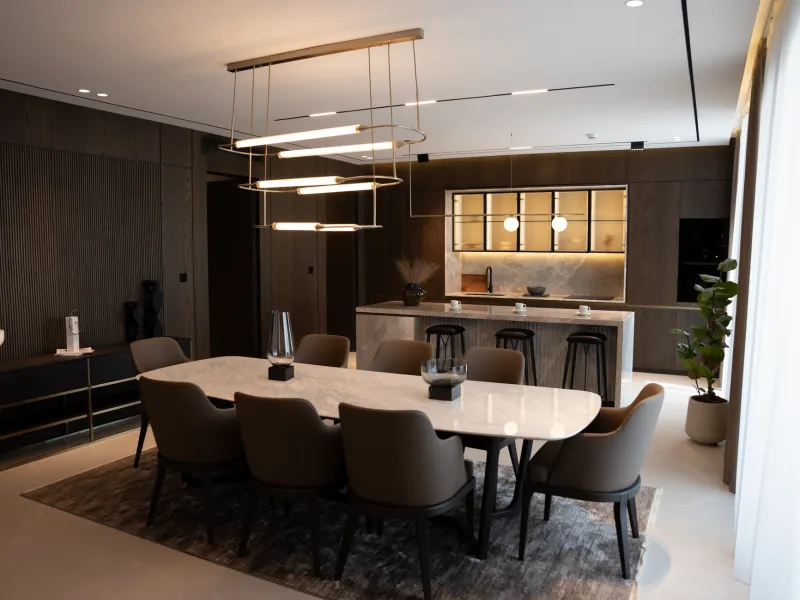
In Manhattan's most exclusive enclaves, something extraordinary is happening — or rather, not happening. Properties that would once have commanded splashy marketing campaigns, glossy brochures, and carefully orchestrated open houses are now trading hands in near-total silence. No listing. No days on market. No digital footprint. Just a quiet transfer of title between parties who prefer it that way.
This is the privacy paradox at the heart of today's ultra-luxury real estate market: the more desirable a property, the less likely it is that the general public will ever know it was available.
The Architecture of Anonymity
Off-market transactions — sometimes called pocket listings or whisper listings — are not new. Discretion has always been a courtesy extended to high-profile clients navigating sensitive circumstances: divorce, estate liquidation, or the particular vulnerability that comes with public wealth. What is new is the scale and intentionality of the shift.
Industry data suggests that in markets such as New York, Los Angeles, Miami, and Chicago, a meaningful and growing share of residential transactions above the $10 million threshold never reach the Multiple Listing Service. Some estimates from boutique brokerage networks place that figure as high as one in three ultra-luxury sales. The number is difficult to verify precisely — which is, of course, the point.
"The listing itself has become a liability for certain clients," explains one senior broker at a white-glove Manhattan firm who requested anonymity to speak candidly. "The moment an address appears publicly, you've lost control of the narrative. You've invited speculation about motivation, about pricing, about personal circumstances. Our most discerning clients are not willing to accept that exposure."
Security, Status, and the Signal of Scarcity
For ultra-high-net-worth buyers, the rationale for pursuing off-market acquisitions is layered and often deeply personal. Security concerns rank prominently. A public listing broadcasting the precise address, floor plan, and interior photographs of a $20 million residence is, in the estimation of many private security advisors, an operational risk. It maps vulnerabilities, signals the occupant's financial profile, and creates a permanent digital record that cannot be fully retracted.
Beyond personal safety, there is the currency of exclusivity itself. In a market where status is communicated through access rather than acquisition, learning of a property before it reaches the open market carries its own form of social capital. Being offered a property off-market signals that one belongs to the right network — that one's broker has cultivated the relationships necessary to unlock what the public cannot see.
This dynamic creates a self-reinforcing ecosystem. Sellers who choose the off-market route signal that their property is of sufficient quality and their circumstances sufficiently secure that they need not compete for attention. Buyers who operate within this ecosystem demonstrate that their resources and relationships are equally rarified.
How the Network Actually Functions
The mechanics of off-market luxury real estate are less mysterious than the mythology surrounding them, though they do require a particular kind of institutional knowledge. The process typically begins with a seller's broker quietly circulating information — sometimes verbally, sometimes through encrypted communication channels — among a curated list of buyer's agents whose clients are known to be actively seeking property in a given tier.
In cities like New York, informal networks of elite brokers have existed for decades, sustained by mutual trust and the expectation of reciprocity. A broker who surfaces a qualified buyer for an off-market listing earns standing within the network; one who violates confidence or brings unqualified parties loses it. The social architecture is as important as the legal one.
Some of the nation's most significant residential transactions have concluded through precisely this mechanism. In Los Angeles, several properties in the Bird Streets and Bel Air that would have attracted intense media scrutiny traded quietly, with ownership transferring through LLCs and trusts that further obscure the identities of the principals. In Manhattan, full-floor condominium units and co-op apartments in pre-war buildings on Fifth and Park Avenues have changed hands with no public record beyond the deed filing.
The Regulatory Landscape
The off-market trend has not gone unnoticed by industry regulators. The National Association of Realtors introduced the Clear Cooperation Policy in 2020, requiring member agents to submit listings to their local MLS within one business day of marketing a property. The rule was designed to promote transparency and equal access to inventory — goals that are, in theory, universally endorsed.
In practice, the policy has generated sustained debate within the luxury segment. Critics argue that it fails to account for the legitimate privacy interests of ultra-high-net-worth clients and that it effectively mandates public exposure as the price of professional representation. Supporters contend that a fragmented, relationship-dependent market ultimately disadvantages buyers without access to elite broker networks.
The tension between these positions remains unresolved, and enforcement is uneven. Many luxury brokers have found compliant pathways — office exclusives, delayed marketing certifications — that preserve a measure of privacy within the letter of the rule. The spirit, however, is frequently a casualty.
What This Means for the Market
The broader consequences of the off-market trend are significant and not uniformly positive. Price discovery suffers when comparable sales are withheld from public databases. Buyers without access to elite networks are systematically excluded from the most desirable inventory. And the concentration of ultra-luxury transactions within a small circle of brokers raises legitimate questions about competition and market efficiency.
For sellers, the calculus is different. A property that sells quietly, at a price negotiated between motivated parties without the pressure of public scrutiny, may achieve an outcome that benefits all involved — or it may leave value unrealized that competitive bidding would have surfaced.
What is beyond dispute is that the ultra-luxury market has developed a parallel economy, one operating largely outside the visibility of conventional real estate infrastructure. In that economy, the most valuable commodity is not square footage or architectural pedigree — though those matter enormously. The most valuable commodity is access itself.
At 112 Mercer, we understand that exceptional spaces demand exceptional discretion. The addresses that define a city are rarely found by accident.