The Paper Trail That Commands a Premium: Documentation, Pedigree, and the New Architecture of Trust
When a collector acquires a significant work of art, the transaction is accompanied by something nearly as important as the work itself: its history. Certificates of authenticity. Exhibition records. Provenance documentation tracing ownership through decades or centuries. The paper trail does not merely describe the object — it substantiates its value, contextualizes its significance, and provides the buyer with a defensible basis for the price paid.
For most of real estate's history, no equivalent infrastructure existed. A property was purchased on the strength of a physical inspection, a title search, and whatever disclosures the seller's attorney deemed necessary. The materials were unknown. The renovation contractor was unverified. The architect's credentials were a matter of reputation rather than record. The buyer proceeded largely on faith.
That model is under significant pressure at the upper end of the market — and the forces reshaping it are arriving simultaneously from multiple directions.
The Demand for Verified History
Among ultra-high-net-worth buyers transacting at the seven-figure and above threshold — a cohort that has grown substantially in the United States over the past decade — the tolerance for ambiguity has diminished considerably. These are individuals who apply rigorous diligence to their financial holdings, their art collections, and their philanthropic commitments. They are increasingly applying the same discipline to their real estate acquisitions.
The questions being asked in these transactions have changed in character. It is no longer sufficient to confirm that a kitchen was renovated three years ago. Buyers want to know who designed it, which fabricators produced the cabinetry, where the stone was quarried, and whether the installation was completed by licensed contractors whose work was independently inspected. They want, in short, a record — one that is comprehensive, verifiable, and transferable.
The motivation is partly financial. A property whose material provenance is fully documented is a property whose value can be substantiated in ways that an undocumented comparable cannot. In an environment where buyers are competing for a limited supply of genuinely exceptional residences, documentation has become a differentiating asset.
But the motivation is also philosophical. For buyers who have spent careers building and protecting complex asset portfolios, the idea of acquiring a significant property without a comprehensive record of its physical history is, at some level, simply inconsistent with how they operate.
Architect Credentials and the Pedigree Premium
The design provenance of a luxury property — who conceived it, who executed it, and what institutional recognition that work has received — has always carried informal weight in the market. What has changed is the degree to which that weight is being formalized and quantified.
Properties designed by architects of national or international distinction have long commanded premiums over comparable residences by less celebrated practitioners. What the current moment has added is a demand for documentation that substantiates those credentials and traces the design lineage in granular detail.
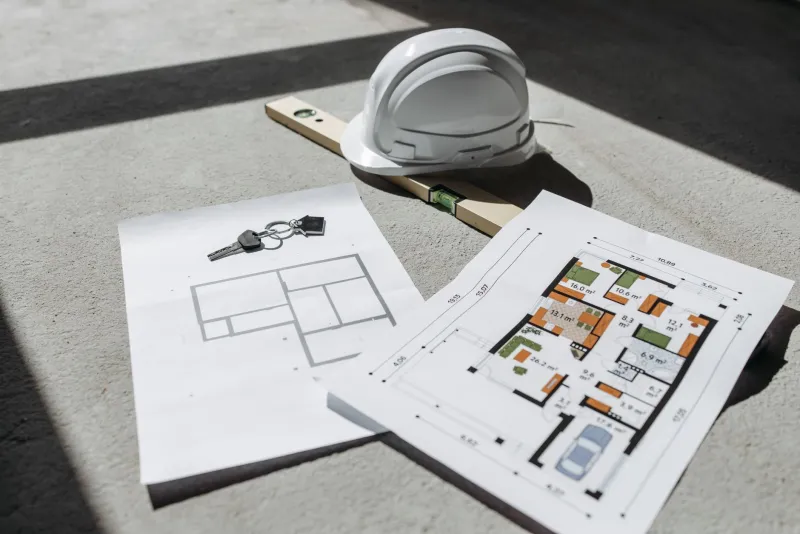
Original architectural drawings. Correspondence between architect and client that illuminates the design intent. Records of material selections and the rationale behind them. Certifications from industry bodies — the American Institute of Architects, the International WELL Building Institute, LEED certification authorities — that attest to standards met and processes followed. These documents, assembled into what some brokers are beginning to call a design dossier, are becoming standard provisions in transactions at the highest price points.
The parallel to fine art is explicit and deliberate. "We are treating these properties the way a major auction house treats a significant consignment," one Manhattan broker noted recently. "The documentation is not ancillary to the transaction. It is part of the product."
Blockchain and the Immutable Record
The technological infrastructure supporting this documentation revolution is evolving rapidly. Blockchain-based record-keeping, which first attracted attention in the art world as a mechanism for creating tamper-resistant provenance records, is beginning to find application in real estate at the luxury tier.
The appeal is straightforward. A blockchain record of a property's renovation history — timestamped, cryptographically secured, and accessible to any party the owner authorizes — provides a level of evidentiary certainty that conventional documentation cannot match. It cannot be altered retroactively. It cannot be selectively edited to omit inconvenient chapters. It is, in the most literal sense, a permanent record.
Several technology companies operating in the luxury real estate sector have begun offering platforms that allow developers and sellers to build and maintain these records from a property's earliest stages of construction. The value proposition is compelling: a property that arrives at market with a complete, verified, blockchain-anchored history of its design, construction, and subsequent modifications is a property that has addressed, in advance, the due diligence questions that sophisticated buyers will inevitably ask.
Adoption remains early-stage, but the trajectory is clear. Among developers building at the ultra-luxury tier in New York, Los Angeles, and Miami, the question is no longer whether to maintain comprehensive digital records but how to present them most effectively to buyers and their advisors.
Material Sourcing and the Ethics of Authenticity
A dimension of provenance that has gained particular traction in the current market is the documentation of material sourcing. Where did the marble in the master bath originate? Can the timber in the library paneling be traced to a certified sustainable forestry operation? Is the reclaimed brick in the kitchen authentic, and is there documentation to support that claim?
These questions, which might once have seemed academic, have become commercially significant for two distinct reasons. The first is straightforward quality assurance: buyers paying for exceptional materials want verification that those materials are what they are represented to be. The second is ethical: a growing segment of ultra-high-net-worth buyers places genuine value on sustainable and responsible sourcing, and they are willing to pay for the documentation that confirms it.
Developers and their design teams have responded by building material sourcing records into their project management processes from the outset — maintaining chain-of-custody documentation for significant materials in the same way a fine wine producer maintains records of a vintage's provenance.
Transparency as the Ultimate Luxury Marker
What all of these developments share is a common premise: that in the upper reaches of the market, transparency is not a concession. It is a statement of confidence.
A seller who arrives at a transaction with complete, verified, beautifully organized documentation of their property's history is communicating something that no marketing language can replicate. They are saying, in effect, that there is nothing here that cannot withstand examination — and that the examination itself will only confirm what the asking price implies.
In a market where the most significant transactions are conducted between extraordinarily sophisticated parties, that confidence is not merely reassuring. It is, increasingly, decisive.
The luxury property that can account for every decision made in its creation — from the architect's first sketch to the final punch list — is a property that has transformed its history into an asset. And in a market defined by the pursuit of irreplaceable value, that may be the most compelling premium of all.